You may also like:
- Market Research with AI (Competitor Analysis Prompts That Actually Work)
- The Art of AI Editing (Prompts That Improve Your Existing Content)
- How to Craft Effective Prompts
Most affiliate marketers know they need a target audience.
Few can actually describe them.
“Women aged 25-45 interested in fitness” isn’t a buyer persona. It’s a demographic slice.
It tells you nothing about what she’s afraid of at 2am. What she’s tried before that didn’t work. What words she uses when she searches for help.
That’s what actually drives buying decisions.
AI can help you build personas at that level of depth. Fast. Even if you’re starting from scratch.
This article shows you how.
Why Vague Personas Produce Vague Content
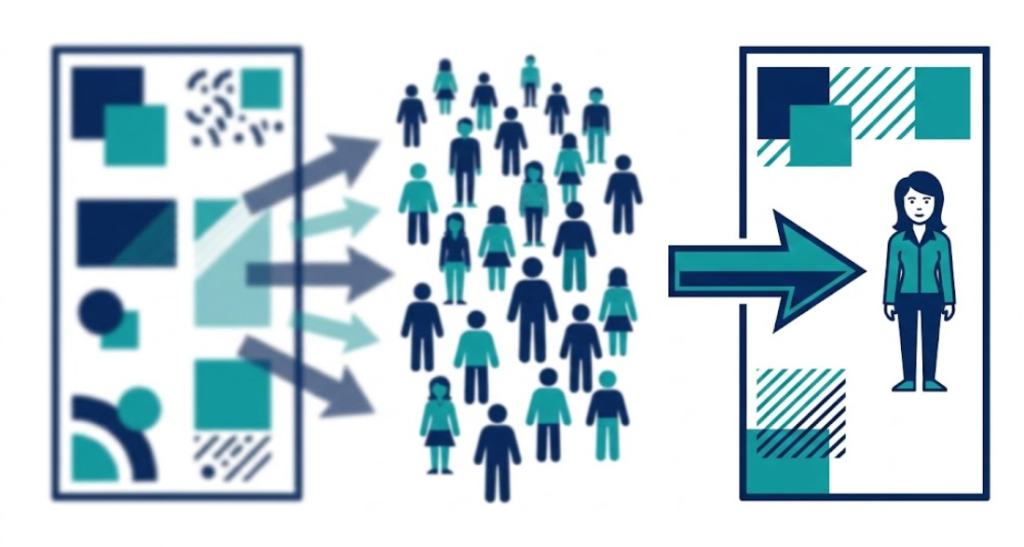
When you don’t know your reader specifically, everything suffers.
Your headlines don’t hook because they speak to everyone and connect with no one.
Your content misses the real problem because you’re guessing at pain points instead of knowing them.
Your calls to action fall flat because you’re not speaking to the specific desire that drives action.
Your affiliate offers don’t convert because you haven’t matched the product to the exact frustration your reader has.
A detailed buyer persona fixes all of this.
It’s not a marketing exercise. It’s the foundation everything else is built on.
What a Real Buyer Persona Includes
Most people build personas that stop at surface level:
- Age and gender
- Job title
- General interests
That’s not enough.
A persona that actually improves your content goes deeper:
Demographics — the basic layer. Who they are on paper.
Psychographics — values, beliefs, worldview. How they see themselves and the world.
Pain points — specific frustrations, not general ones. Not “wants to lose weight” but “embarrassed to go to the gym because she gained 30 pounds after her second pregnancy.”
Desires — what they actually want to feel, achieve, or become. The emotional destination.
Objections — why they hesitate. What’s stopped them before. What makes them skeptical.
Language — the exact words and phrases they use. This is gold for headlines, hooks, and copy.
AI builds all six layers — if you prompt it correctly.
The A.S.K. Method for AI Persona Building

Three stages. Each one digs deeper than the last.
A — Anchor: Define the starting point. Who is this person at the most basic level?
S — Surface: Pull up their psychology. What drives them, scares them, and motivates them?
K — Know: Get inside their head. What words do they use? What have they tried? What do they believe?
Let’s run through each stage with the prompts.
A — Anchor: Define the Starting Point
You don’t need much to start. A niche, a product category, or even just a problem to solve.
Prompt 1: The Avatar Foundation
I'm creating content in the [niche] space targeting people interested in [topic/product type].

Build me a detailed buyer persona for this audience.

Include:
1. Name and basic demographics (age, gender, occupation, income level)
2. Living situation and life stage
3. How they spend a typical day
4. Where they consume content online
5. What they've already tried in this space
6. Why those attempts fell short

Make this specific and realistic. Not a generic average — a vivid, believable individual.
Give the persona a name. It sounds trivial but it makes everything that follows more concrete. You’re writing for Sarah, not “women aged 30-40.”
S — Surface: Pull Up Their Psychology
Now go deeper. This is where personas go from useful to powerful.
Prompt 2: The Pain Point Excavator

Surface-level pain points produce surface-level content. This prompt goes below the waterline.
Based on this buyer persona: [paste your Prompt 1 output]

Dig into their pain points at three levels:

SURFACE PAIN (what they'd say out loud):
- What problem do they admit to having?
- What do they search for?

REAL PAIN (what's underneath):
- What's the deeper frustration driving the surface problem?
- What have they tried that hasn't worked?
- What does failure in this area cost them emotionally?

HIDDEN PAIN (what they won't say):
- What are they embarrassed about?
- What do they fear others will think?
- What do they secretly believe about themselves that holds them back?

Use specific, vivid language. Avoid generic statements.
The hidden pain layer is where great copy comes from. Most competitors never go there.
Prompt 3: The Desire Mapper
Pain gets people searching. Desire gets them buying.
For this buyer persona: [paste persona]

Map their desires at two levels:

SURFACE DESIRE (what they say they want):
- The stated goal or outcome
- The metric they'd use to measure success

DEEP DESIRE (what they actually want):
- The emotional state they're chasing
- How they want to feel about themselves
- How they want others to see them
- What achieving this would mean for their identity

Then write one sentence that bridges their pain to their desire.
This sentence is the core of every piece of content you'll create for them.
That bridge sentence becomes your positioning. Your hook formula. Your through-line.
K — Know: Get Inside Their Head
This stage turns your persona into a content weapon.
Prompt 4: The Language Extractor

The words your avatar uses are more valuable than any headline formula.
For this buyer persona: [paste persona]

Extract the specific language they use:

1. How do they describe their problem in their own words?
   (not clinical or formal — raw and emotional)

2. What phrases do they repeat in forums, reviews, and comments?

3. What do they call themselves? (e.g. "busy mom" not "working parent")

4. What words do they use when they finally find something that works?
   ("life-changing", "wish I'd found this sooner", "finally")

5. What are their top 5 search phrases when they're frustrated?

6. What are their top 5 search phrases when they're ready to buy?

Format as a swipe file I can use directly in headlines and hooks.
Paste this output into a doc and keep it open when you write. Use their words, not yours.
Prompt 5: The Objection Builder
Every reader has reasons not to trust you, not to buy, not to act. Know them before they stop you.
For this buyer persona: [paste persona]

List every reason they would hesitate or not act:

TRUST OBJECTIONS:
- Why would they be skeptical of this content or offer?
- What have they been burned by before?

PRACTICAL OBJECTIONS:
- Time, money, technical ability
- What feels too complicated or risky?

BELIEF OBJECTIONS:
- What do they believe about themselves that makes them think this won't work for them?
- What's the "yeah but my situation is different" story they tell themselves?

For each objection, write one sentence of copy that addresses it directly.
Now you can handle objections before they arise — in your content, your headlines, your calls to action.
Prompt 6: The Day-in-the-Life Narrative
This final prompt turns data into a story.
Using everything we've built about this persona: [paste full persona so far]

Write a 200-word "day in the life" narrative from their perspective.

Write in first person as the avatar.

Include:
- A moment that triggers their problem or frustration
- How they feel in that moment
- What they do next (search, ask, scroll)
- What kind of content would stop them mid-scroll
- What would make them click, read, and trust

This should read like a real person's inner monologue — not a marketing document.
Read this before you write every piece of content. It keeps you inside your reader’s head instead of your own.
Putting It Together: Your One-Page Persona
After running all six prompts, consolidate everything into a single reference doc.
Run this final prompt:
Using all the research we've done on this persona, create a one-page buyer persona summary.

Include:
- Name, photo description, and one-line bio
- Top 3 pain points (with emotional depth)
- Top 3 desires (surface and deep)
- Key objections (and how to handle each)
- 10 exact phrases they use (swipe file)
- The bridge sentence connecting their pain to their desire
- Content formats and platforms they prefer
- One paragraph written as them describing their ideal solution

Format this as a scannable reference card I can use before writing any content.
Print it. Pin it above your desk. Read it before every article, email, and social post.
Common Persona Mistakes
Mistake 1: Building one persona for everyone
Symptoms: Content feels generic. Can’t figure out which angle to use. Everything sounds the same.
Fix: Build separate personas for separate awareness levels. A beginner and an experienced buyer in the same niche need completely different content.
Mistake 2: Never updating your persona
Symptoms: Content that worked 12 months ago stops converting. Language feels slightly off.
Fix: Re-run Prompt 4 (Language Extractor) every 6 months. Markets evolve. So does the language.
Mistake 3: Keeping the persona in your head
Symptoms: Every piece of content starts from scratch. No consistent voice or positioning.
Fix: Write it down. One doc. Reference it every time.
The Bottom Line
Vague personas produce vague content.
Vague content produces vague results.
The six prompts in the A.S.K. method take less than an hour to run. What they produce — specific pain, real desire, exact language, handled objections — will improve every piece of content you create from this point forward.
You’re not writing for an audience anymore.
You’re writing for one person.
That’s the difference.