Most affiliate marketers don’t run campaigns.
They publish content and hope it accumulates into something.
Hope is not a strategy.
A campaign is different. It has a defined audience, a specific goal, a deliberate sequence of content, and a clear path from first touch to conversion. Every piece serves the whole. Nothing is random.
The difference between scattered content and a campaign is strategy — and strategy is exactly what most people skip because it feels complicated and time-consuming.
AI makes it fast. This article makes it systematic.
Seven prompts. One framework. A complete campaign strategy built in a single working session.
You may also like:
- Hook Writing Formulas (AI Prompts for Attention-Grabbing Openings)
- Automation Prompts (Creating SOPs and Process Documentation)
- SEO Keyword Research Prompts (Finding Low-Competition Opportunities)
What a Campaign Actually Is
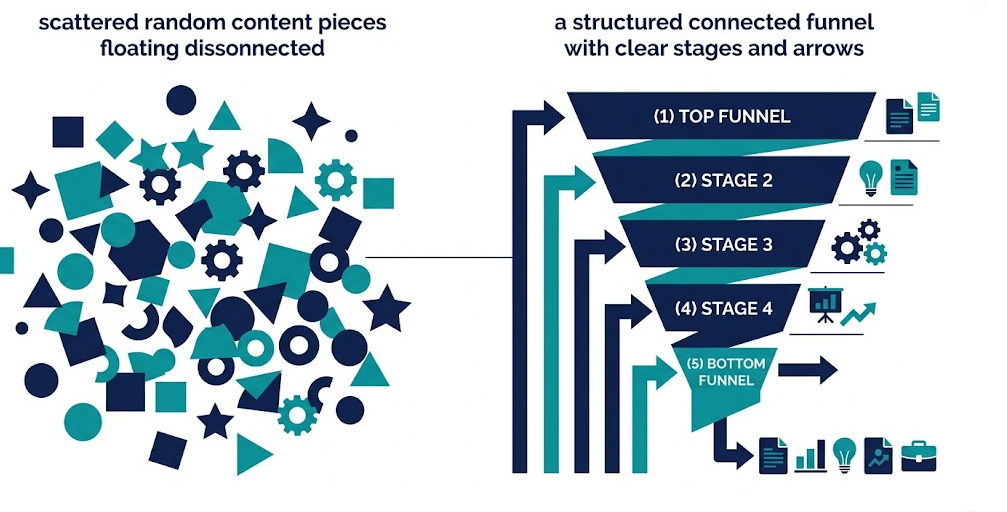
Before the prompts, get clear on what separates a campaign from a content pile.
A campaign has five components that work together:
A defined audience — not “people interested in fitness” but “women over 40 who’ve tried diets before and are frustrated they haven’t worked long-term.”
A specific conversion goal — not “make money” but “drive 200 email sign-ups” or “generate 50 affiliate sales of X product by Y date.”
A content sequence — pieces that are designed to move the same reader from awareness through trust to action. Not individual articles — a journey.
A traffic strategy — a deliberate plan for getting the right people into the sequence. Not waiting for organic search to figure itself out.
A measurement system — defined metrics that tell you whether the campaign is working before it’s over, not after.
Most affiliate content has none of these. A campaign has all five — and AI helps you build each one.
The C.A.M.P.A.I.G.N. Framework
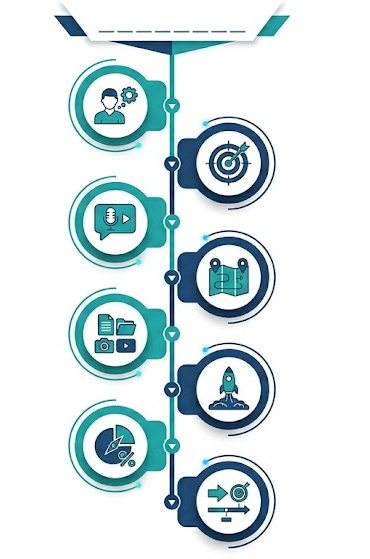
Eight stages. Each one locks in a critical strategic decision before you create anything.
C — Customer: Who specifically are you trying to reach?
A — Aim: What specific outcome are you driving toward?
M — Message: What core idea runs through the entire campaign?
P — Path: What sequence moves the customer from awareness to conversion?
A — Assets: What content pieces does this path require?
I — Ignition: How do you get the right people into the campaign?
G — Gauge: How do you measure whether it’s working?
N — Next: What happens after conversion?
C — Customer: Define Who You’re Campaigning To
A campaign built for everyone converts no one.
The tighter the audience definition, the stronger every subsequent decision becomes — because every message, every piece of content, and every offer gets evaluated against one specific person.
Prompt 1: The Campaign Audience Definer
I want to build a campaign in the [niche] space.
My general target audience is: [describe broadly]

Sharpen this into a campaign-specific audience by defining:

THE SITUATION:
— What specific situation is this person in right now?
— What have they already tried that hasn't worked?
— What's the emotional state that drives them to search for help?

THE TRIGGER:
— What specific event or realization makes them ready for this campaign?
— What changes in their life or thinking right before they become receptive?

THE BELIEF GAP:
— What do they currently believe about this topic that's holding them back?
— What do they need to believe differently for your campaign to convert?

THE IDEAL OUTCOME:
— What does success look like for them in 30-60 days?
— How will they describe it to a friend when it works?

Write a one-paragraph campaign audience profile.
End with one sentence: "This campaign is NOT for people who..."
That exclusion is as important as the inclusion.
The exclusion sentence is the discipline check. Campaigns that try to speak to everyone drift toward generic. Naming who you’re excluding forces specificity.
A — Aim: Lock in the Conversion Goal
Vague goals produce vague campaigns.
Prompt 2: The Campaign Goal Setter
My campaign audience is: [paste Prompt 1 output]
My monetization model is: [affiliate commissions / email list / product sales]
My available campaign window is: [30 days / 60 days / 90 days]
My current traffic level is: [approximate monthly visitors or followers]

Define a specific, achievable campaign goal:

1. PRIMARY CONVERSION METRIC:
   — One number that defines campaign success
   — (e.g. 150 email sign-ups, 40 affiliate sales, 500 clicks to offer)

2. SECONDARY METRICS:
   — 2-3 leading indicators that tell you the campaign is on track
     before the primary metric is hit
   — (e.g. article traffic, click-through rate, email open rate)

3. MINIMUM VIABLE SUCCESS:
   — The result below which this campaign would be considered a failure
   — What would you need to see to justify running it again?

4. TRAJECTORY CHECK:
   — Based on my current traffic, is this goal realistic?
   — What would need to be true for me to hit it?

Be honest about the numbers. An unrealistic goal produces a demoralizing campaign.
A realistic stretch goal produces a focused one.
The minimum viable success definition is something most campaign planners skip. Without it, every campaign “almost worked” — which means you never learn whether to repeat it or scrap it.
M — Message: Find the Campaign’s Core Idea
Every campaign needs one central message that everything else supports.
Not a tagline. Not a slogan. A strategic belief — the thing your audience needs to accept as true for your conversion to make sense.
Prompt 3: The Core Message Builder
My campaign audience is: [paste Prompt 1 output]
My campaign goal is: [paste Prompt 2 output]
The affiliate offer or conversion I'm driving toward is: [describe it]

Build my campaign's core message by identifying:

THE CENTRAL BELIEF:
— What does my audience need to believe for my offer to be the obvious solution?
— State it as a belief shift: "From believing X... to believing Y"

THE BIG IDEA:
— What's the one insight that — if understood — makes everything else click?
— This should be specific to my niche and surprising to a first-time reader

THE PROOF FRAME:
— What type of proof will make this belief shift feel credible?
   (data, case studies, expert authority, personal story, logical argument)

THE CAMPAIGN THEME:
— Write a campaign theme sentence that:
   - States what the campaign is about
   - Implies the belief shift
   - Connects to the conversion goal
   - Could run as a thread through every piece of content

Then write 3 different ways to express this theme in content:
- As an article headline
- As an email subject line
- As a social media hook
The belief shift framing is strategic gold. You’re not just trying to sell a product — you’re trying to move someone from one mental position to another. When the belief shift is clear, every piece of content has a job: moving the reader one step closer to that new belief.
P — Path: Design the Conversion Journey
This is the architecture of the campaign. The sequence that takes a stranger from first encounter to conversion.
Prompt 4: The Conversion Path Designer
My campaign audience is: [paste]
My campaign goal is: [paste]
My core message and belief shift is: [paste Prompt 3 output]

Design a conversion path with these stages:

STAGE 1 — AWARENESS (first touch):
— How does the target audience first encounter this campaign?
— What content format works best for this entry point?
— What is the one job of this first piece? (create curiosity / name the problem / challenge a belief)

STAGE 2 — INTEREST (second touch):
— What content deepens engagement after the first touch?
— What belief does this stage need to shift?
— What's the bridge from Stage 1 to Stage 2?

STAGE 3 — CONSIDERATION (third touch):
— What content moves the reader from interested to seriously considering?
— Where does social proof, comparison, or detailed guidance belong?
— What objection does this stage need to address?

STAGE 4 — CONVERSION (final touch):
— What is the conversion moment?
— What content or trigger makes the reader take the desired action?
— What does the conversion CTA look and sound like?

For each stage:
- Content type (article / email / video script / social post)
- One working title
- The single job of that piece
- How it connects to the next stage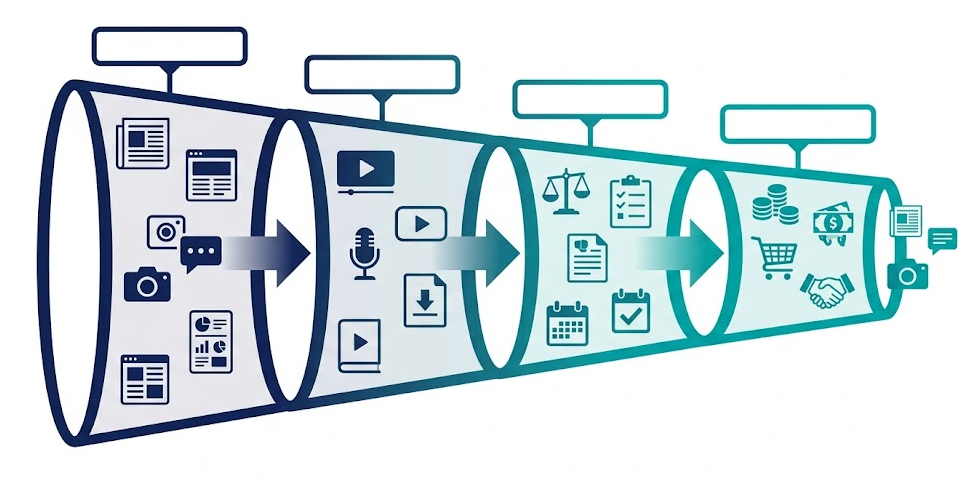
The “single job” constraint is critical. Content that tries to do two things at once does neither well. Each piece in a campaign should have one specific role — and only one.
A — Assets: Build the Content Inventory
Now you know what you need to create.
Prompt 5: The Asset Planner
Here is my conversion path: [paste Prompt 4 output]
My publishing capacity is: [X pieces per week]
My campaign window is: [X days/weeks]

Build a complete asset inventory for this campaign:

For each piece of content in the path:
- ASSET TYPE: [article / email / landing page / social post / lead magnet]
- WORKING TITLE: [specific and search or click-optimized]
- WORD COUNT / LENGTH TARGET: [based on format and depth required]
- TARGET KEYWORD: [for SEO assets]
- CAMPAIGN STAGE: [awareness / interest / consideration / conversion]
- INTERNAL LINKS: [which other campaign assets this connects to]
- PRODUCTION PRIORITY: [must have / should have / nice to have]

Then flag:
- The minimum viable campaign — the fewest assets that could still convert
- The full campaign — every asset needed for maximum effectiveness
- The production sequence — what order to create them in
The minimum viable campaign flag is practical wisdom. Campaigns that require 20 pieces before launch never launch. Knowing the minimum viable version means you can start with five pieces and build from there.
I — Ignition: Get the Right People Into the Campaign
A perfect campaign with no traffic converts nobody.
Prompt 6: The Traffic Ignition Planner
My campaign audience is: [paste Prompt 1 output]
My campaign assets are: [paste Prompt 5 output — specifically the awareness-stage pieces]
My available traffic channels are: [organic search / email list / social / paid / partnerships]

Build a traffic ignition plan that:

1. IDENTIFIES WHERE MY AUDIENCE ALREADY IS:
   — Which platforms, communities, or search queries do they use?
   — Where are they most reachable right now?

2. MATCHES CHANNELS TO CAMPAIGN STAGES:
   — Which channels are best for awareness-stage entry?
   — Which channels work better for consideration and conversion?

3. SEQUENCES THE IGNITION:
   — What happens in Week 1 to seed initial traffic?
   — How does traffic compound through the campaign window?
   — What's the amplification strategy if early results are strong?

4. IDENTIFIES QUICK WIN TRAFFIC SOURCES:
   — What could drive traffic within 48 hours of launch?
   — (email blast, social share, partner outreach, repurposed content)

5. SETS TRAFFIC TARGETS PER STAGE:
   — How many people need to enter at each stage for the
     conversion goal to be achievable?
   — Work backwards from the conversion goal using realistic drop-off rates.
Working backwards from the conversion goal is the most clarifying exercise in campaign planning.
If you need 50 sales at a 2% conversion rate, you need 2,500 people at the conversion stage.
If 30% of interested readers reach that stage, you need 8,333 interested readers.
Suddenly “publish and hope” looks very different from what’s actually required.
G — Gauge: Measure What Matters
Prompt 7: The Campaign Measurement System
Here is my complete campaign plan: [paste key outputs from all prompts]

Build a measurement system that tells me whether this campaign is working
before it's over — not after.

WEEKLY CHECKPOINTS:
— What 3 metrics should I check every week?
— What does "on track" look like at week 2, week 4, week 6?
— What's the early warning signal that something isn't working?

DIAGNOSTIC QUESTIONS:
If traffic is strong but conversions are low: where's the leak?
If conversions are strong but traffic is low: what do I amplify?
If both are low: what's the root cause?

DECISION TRIGGERS:
— At what point should I double down on what's working?
— At what point should I adjust the message or path?
— At what point should I cut losses and pivot?

CAMPAIGN POST-MORTEM:
— After the campaign, what 5 questions should I answer to inform the next one?
N — Next: Plan the Post-Conversion Experience
Most campaigns end at conversion. The best ones treat conversion as the beginning.
My campaign conversion goal is: [paste]
After someone converts, they are now: [describe their new status — email subscriber, buyer, etc.]

Design the post-conversion experience:

IMMEDIATE NEXT STEP:
— What happens right after they convert?
— What content or communication do they receive in the first 24 hours?

30-DAY NURTURE:
— What sequence keeps them engaged and builds trust?
— What's the next conversion event you're moving them toward?

LONG-TERM VALUE PATH:
— How does this campaign audience fit into your larger content ecosystem?
— What's the highest-value action they could eventually take?
Campaigns that end at conversion leave money on the table. The reader who just converted is the most engaged reader you have — and the easiest person to convert again.
The Bottom Line
Publishing content without a campaign strategy is like opening a shop and hoping people wander in.
A campaign is deliberate. It knows who it’s for, what it’s trying to achieve, what sequence moves people toward that outcome, and how to measure whether it’s working.
Eight framework stages. Seven prompts. One working session.
The difference between content that accumulates and content that converts isn’t talent or volume.
It’s strategy.